TL;DR: A vacuum switch monitors pressure below atmospheric pressure and changes an electrical contact at a defined setpoint. That signal can confirm that sufficient vacuum is available, trigger an alarm or control connected equipment. The vacuum range alone is not enough to select the correct switch: pressure reference, switching direction, reset point, contacts, materials and electrical load also matter.
A suction gripper should not lift a component until it has established a secure vacuum. A packaging line may also need to stop or alert an operator if suction is lost during sealing. In both cases, a vacuum switch provides the electrical signal that tells the control system when to act.
Here, “vacuum switch” means an industrial vacuum pressure switch, not the vacuum interrupters found in medium-voltage electrical switchgear.
What is a vacuum switch?
A vacuum switch is a device that monitors pressure in the vacuum range and changes an electrical output when a defined threshold is reached.
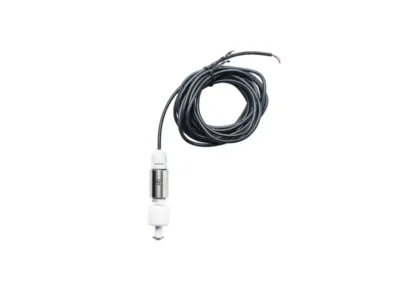
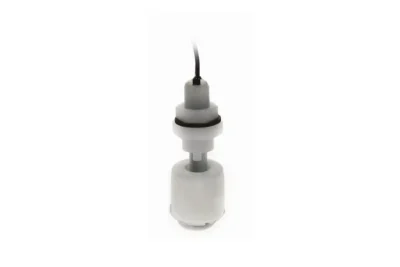
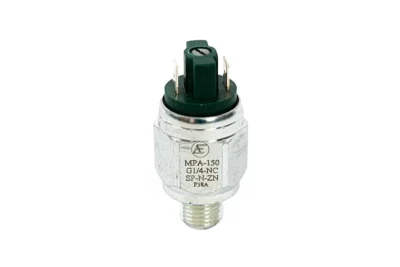
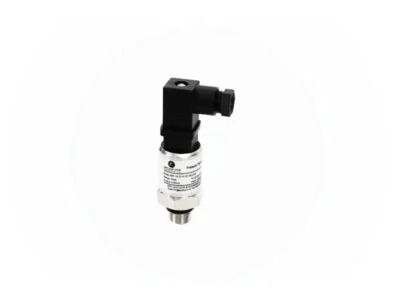
Vacuum is usually expressed as pressure below atmospheric pressure. Depending on the device and application, the value may be stated as gauge pressure or absolute pressure, so the pressure reference must always be checked. Applications Engineering supplies a wider range of vacuum monitoring products for different system requirements.
Unlike a pressure transducer, which provides a continuous measurement signal, a basic vacuum switch gives a discrete electrical output. It may open, close or change over a circuit connected to a pump, valve, relay, controller, alarm or machine interlock. The switch provides the signal; the controller, relay or other connected device carries out the action.
How does a vacuum switch work?
A typical electromechanical vacuum switch turns a pressure change into mechanical movement, which then operates an electrical contact.
1. The vacuum condition changes. A pump, ejector, valve or process changes the pressure in the connected system.
2. Pressure acts on the sensing element. The pressure at the switch port changes relative to its reference.
3. The sensing element moves. A diaphragm, membrane, piston or similar element moves against a spring or calibrated mechanism.
4. The setpoint is reached. At the adjusted threshold, the internal mechanism actuates the electrical contacts.
5. The control system responds. The contacts open, close or change over, signalling a relay, controller, alarm, pump or valve.
Electronic vacuum switches use a pressure sensor and an electronic output instead of a purely mechanical contact mechanism. They perform the same basic monitoring role, although their accuracy, outputs and configuration options may differ.
What happens when the setpoint is reached?
The setpoint is the vacuum level at which the switch actuates. The resulting action depends on the operating direction, the normally open or normally closed contact state, and the way the circuit is wired.
• A switch may close a circuit once sufficient vacuum has been achieved, allowing the next machine step to begin.
• A loss of vacuum may open a circuit, change over to an alarm path or send a signal to the controller.
A practical example: suction lifting
Consider a suction gripper lifting a metal component. The pump first creates vacuum at the gripper. Once pressure falls to the target switching point, the switch tells the controller that the component can be moved. If a leak weakens the vacuum, the switch resets so the control system can stop the movement or raise an alarm.
In this type of application, switching direction, reset point and circuit logic are just as important as the nominal range.
Why the reset point and hysteresis matter
A vacuum switch does not normally reset at exactly the same pressure at which it actuates. The difference between the actuation point and reset point is often called the switching differential or hysteresis.
The differential helps prevent rapid switching, or chatter, when pressure fluctuates around the threshold. If it is too wide or too narrow for the process, equipment may restart or an alarm may clear at the wrong point. Always check the model-specific value in the datasheet.
What is the difference between a vacuum switch and a pressure switch?
A vacuum switch is a type of pressure switch designed to operate at vacuum pressures rather than only at positive gauge pressures.
• Conventional pressure switches commonly respond to positive pressure above atmospheric pressure.
• A vacuum switch responds to pressure below atmospheric pressure or to a change in the system’s vacuum level.
Both devices may use a diaphragm, piston or other pressure-sensitive element to operate their contacts. Compare the operating range, pressure reference, actuation direction and switching specification rather than treating them as unrelated technologies. For more detail, read how a pressure switch works.
SPST and SPDT vacuum switches explained
SPST vacuum switches
SPST means single pole, single throw. It provides one circuit path that opens or closes at the switching point. An SPST switch may be supplied as normally open or normally closed.
Choose SPST when one circuit simply needs to make or break at the threshold. Applications Engineering offers SPST options within its vacuum-switch range.
SPDT vacuum switches
SPDT means single pole, double throw. A common contact changes between normally closed and normally open paths. This can deactivate one circuit while activating another, or provide separate normal and alarm states.
Choose SPDT when the circuit needs a changeover function or greater wiring flexibility. It is not automatically better than SPST; it simply provides a different contact arrangement. The Applications Engineering vacuum-switch range includes both SPST and SPDT contact options.
Where are vacuum switches used?
Vacuum switches are used when a control system needs a clear electrical indication that vacuum has been achieved, maintained or lost.
- Vacuum pump control and confirmation. Confirms that the target vacuum has been reached or signals the pump to start.
- Pneumatic handling and suction systems. Verifies suction before a machine lifts, transfers or positions a component.
- Packaging and processing machinery. Provides a threshold signal for sealing, forming, holding or product transfer.
- Vacuum-loss monitoring. Alerts the controller or operator to a leak, blockage or loss of suction.
- Machine interlocks. Prevents the next stage from starting until the specified vacuum condition is present.
- Vacuum chambers and process equipment. Supplies a threshold signal for sequencing pumps, valves or other equipment.
Application suitability still depends on the process medium, operating environment and required performance.
How to choose the correct vacuum switch
Start with the operating range, but do not stop there. Before choosing an industrial vacuum switch, work through the following points.
1. Required operating and adjustment range. Record the normal operating pressure, the weakest acceptable vacuum and the intended switching point. Do not select a switch merely because the desired figure appears somewhere within its maximum range.
2. Pressure reference and units. Establish whether the values are gauge or absolute, then verify the units, such as mbar, bar, kPa or inches of mercury.
3. Actuation and reset behaviour. Decide whether actuation is needed as pressure falls and vacuum strengthens, or as the vacuum weakens and pressure rises. Verify the reset point and differential.
4. SPST or SPDT contacts. Choose a simple make-or-break action or a changeover contact according to the circuit requirement.
5. Normally open or normally closed logic. Consider the required state during normal operation, vacuum loss, cable failure and loss of power.
6. Electrical rating and load type. The contact rating must suit the voltage, current and load. A motor, solenoid or other inductive load may need an interposing relay rather than being switched directly.
7. Media and material compatibility. Make sure the diaphragm, seals, housing and process connection are compatible with the medium.
8. Process and electrical connections. Verify thread type, port size, cable arrangement, flying leads, spade terminals or connector requirements.
9. Operating environment. Review temperature, ingress protection, vibration, installation space and any hazardous-area requirements.
10. Accuracy, repeatability and service life. Match the performance requirement to the consequences of early, late or inconsistent switching.
Selection principle: Two switches may cover the same nominal range yet differ in contact logic, reset behaviour, electrical capacity, materials and environmental protection. Those differences often determine whether a product is suitable in practice.
What information should you provide when asking for a vacuum switch?
A clear application brief allows unsuitable products to be ruled out quickly. Include:
• Normal operating vacuum and minimum acceptable vacuum. These establish the working window and show whether the process has enough margin around the setpoint.
• Required switching point and direction. State whether the signal is needed as vacuum strengthens or when a loss of vacuum must trigger a response.
• Process medium. The medium affects diaphragm, seal and body-material compatibility.
• Electrical load and supply. Voltage, current and load type determine whether the contacts can switch the load directly or should operate a relay.
• Process and electrical connections. Thread size, connector type and available space affect installation and replacement compatibility.
• Required contact logic and certification. Specify SPST or SPDT, NO or NC behaviour, ingress protection and any hazardous-area approval required by the application.
For replacement enquiries, also provide the full product code, a clear photograph of the label and the existing wiring or contact diagram. Products that look similar can have materially different specifications.
Common vacuum-switch selection mistakes
• Confusing the intended setpoint with the switch’s full adjustment range.
• Failing to check whether the pressure is gauge or absolute.
• Mixing units or assuming that a stronger vacuum always corresponds to a larger numerical value.
• Ignoring the reset differential or hysteresis.
• Choosing the wrong normally open or normally closed logic.
• Treating SPST and SPDT as interchangeable, or assuming SPDT is always preferable.
• Overlooking the connected load and contact rating.
• Selecting incompatible diaphragm, seal or body materials.
• Assuming hazardous-area certification applies without checking a specific model and certificate.
• Replacing an existing switch by appearance alone rather than checking its complete code and specification.
These mistakes usually occur when one headline figure is treated as the whole specification. Sound selection brings the mechanical, electrical and process requirements together.
When should you ask for technical advice?
Ask for technical advice when:
• The process pressure fluctuates close to the desired switching point.
• The medium is aggressive or material compatibility is uncertain.
• The switch will control an inductive or high-current load.
• Hazardous-area certification is required.
• The existing product code is obsolete, incomplete or unclear.
• A non-standard connection, material or mounting arrangement is needed.
• The required actuation direction, NO/NC logic or switching differential is uncertain.
These mistakes usually occur when one headline figure is treated as the whole specification. Sound selection brings the mechanical, electrical and process requirements together.
When should you ask for technical advice?
Ask for technical advice when:
• The process pressure fluctuates close to the desired switching point.
• The medium is aggressive or material compatibility is uncertain.
• The switch will control an inductive or high-current load.
• Hazardous-area certification is required.
• The existing product code is obsolete, incomplete or unclear.
• A non-standard connection, material or mounting arrangement is needed.
• The required actuation direction, NO/NC logic or switching differential is uncertain.
Find the right vacuum switch for your application
Browse the Applications Engineering vacuum-switch range or contact Applications Engineering for product-selection advice for product-selection advice. Share the operating range, target setpoint, pressure reference, medium, connection type, electrical load and contact configuration. With that information, the team can narrow the choice to the most appropriate standard or application-specific option.
Share This Post