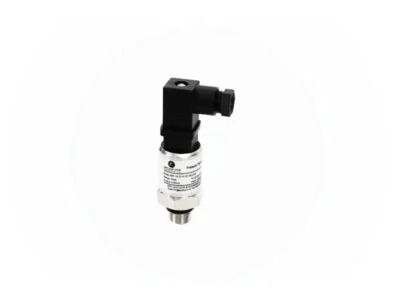
Ensuring consistent sensor monitoring in data centres involves treating pressure, level and temperature devices as critical components of their overall infrastructure.
In UK data centres, running round-the-clock to tight service level agreements (SLAs) and striving for ambitious key performance indicators (KPIs), it’s vital to ensure complete real-time visibility and oversight across power usage, cooling capacity, and leak detection. Doing so minimises the risk of unplanned outages and conserves valuable costs, both of which are priorities for many centres in the UK.
At Applications Engineering, we supply best-in-class sensors, transmitters and monitoring equipment to data centres across the country, and are best placed to explain their vital roles in keeping buildings optimised and in the best possible condition.
Why Sensor Monitoring is Vital
Modern UK data centres handle substantial IT loads and draw substantial amounts of electrical power every day. As such, this makes them highly sensitive to even brief interruptions, with their constant uptime often forming part of their unique selling proposition (USP) to prospective customers.
Industry studies show that power and cooling issues account for a large share of outages in data centres, with even just a minute of downtime translating into substantial financial losses, not to mention reputational damage for operators and frustration for their customers. It is only exacerbated if interruptions are happening more frequently and with unclear explanations and reasoning for why.
Continuous condition monitoring enables operators to spot anomalies in real time and intervene before they escalate to this point. Sensors that measure pressure, temperature, level and flow provide valuable, transmittable data for BMS and DCIM platforms, allowing alarms, trending and predictive maintenance strategies to be built around live operating conditions.
Backup Generators and Fuel Systems
Generator systems are only as reliable as the fuel infrastructure that they underpin. In many data centre projects, magnetic float, ultrasonic or magnetostrictive level transmitters are installed on tanks to ensure there is always sufficient diesel available to supply generators for extended run times.
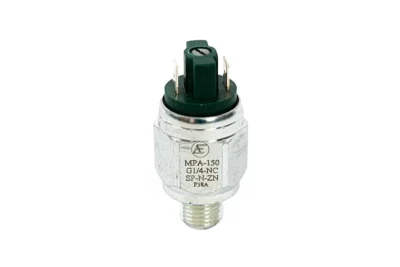
Alongside level sensing, pressure switches and transducers safeguard the fuel delivery lines and transfer pumps. These devices track line pressure and trigger alarms when levels reach a certain low or high threshold, pinpointing and isolating potential blockages, leaks or pump faults early. Furthermore, it reduces the risk of generators failing to start when required, or tripping under load during a mains failure.
Cooling Circuits and Pressure Management
Data centres rely heavily on efficient, quality cooling systems. By extension, it as a process remains one of the largest energy consumers in these environments, with its performance invariably correlational to constant uptime.
Traditional chilled water and air‑cooled systems rely on a network of pumps, valves and heat exchangers, where pressure transducers are used to maintain correct differential pressure and verify that circulation is stable throughout the system. If pressure drops dramatically, it can indicate pump issues, air ingress or leaks. Conversely, if it rises excessively, it may point to valve malfunctions or blockages.
Whether using legacy chilled water systems or newer liquid or immersion cooling solutions, flow switches and sensors confirm that the refrigerant is actually moving where it should. Couple this with temperature sensors placed on supply and return lines and the purpose of these components and how they intertwine with and support each other becomes increasingly clear. In the long run, they collectively help operators become aware of heat rejection, make more informed decisions regarding energy efficiency, and prevent high-density, voluminous AI and server hardware from overheating.
Level Switches and Leak Detection
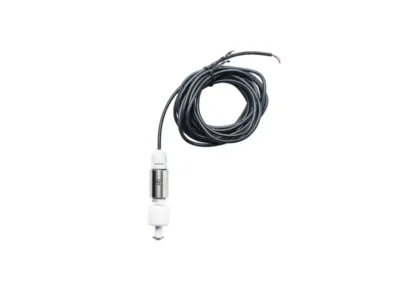
Level switches play a pivotal role in applications such as fuel storage, coolant tanks, header tanks and immersion systems. Optical and float level switches provide a visual reference point when conditions are too high or low, and when integrated with automated pump control, equipment is protected from overfilling and running completely empty.
Lead detection is equally important in raised floors, plant rooms and around cooling distribution units. Compact optical liquid leakage sensors use infrared light reflection to detect the presence of liquid on trays or steel or plastic mounting plates and can be installed in confined spaces (common for data centre server rooms and cooling system storage areas). They are easy to install and maintain, and far more user-friendly than absorbent tape systems.
Temperature and Environmental Monitoring
Temperature sensors are fundamental to environmental monitoring across data centres, as many isolated areas in such a facility are prone to overheating. Operators can deploy best-in-class temperature monitors to measure temperatures or inlets, exhausts, supply systems, coolant reservoirs, and ambient conditions in essential areas, to optimise airflow and keep equipment at optimal environmental conditions.
Many integrated monitoring systems in data centres combine temperature data with other parameters like humidity and differential pressure to provide a complete view of conditions inside a facility.
Why Sensor Quality and Reliability Matters
With such precise and interconnected control architecture, even one failed or mis-calibrated pressure or level sensor can affect fault detection accuracy and speed. If level switches get stuck or pressure transducers fail to work on chilled-water lines, other readings could be adversely affected.
Therefore, robust, industry-approved and tested pressure switches, transducers, level devices and temperature sensors, and integrating them with suitable diagnostics and alarms, therefore, becomes a key decision for data centre managers rather than a routine and haphazard decision.
How Applications Engineering Can Help
Applications Engineering specialises in mechanical switches and sensors for pressure, level, flow and temperature, supported by ISO 9001:2015‑certified quality processes and a strong stockholding at our Sussex facility for rapid delivery. We supply pressure sensors and transducers, float and level switches, and temperature switches suitable for integration into data centres of all sizes.
Working with a knowledgeable supplier and partner like us can simplify the processes of device selection and upgrading architecture, as we’ll know what is compatible with your incumbent solution and make tailored recommendations to improve long-term stability and reliability.
To discuss specific products and integration compatibility, contact Applications Engineering for expert, tailored advice on making your data centre more resilient.
Share This Post