Choosing a level switch usually starts with a simple question: what do you need the tank to do when the liquid reaches a certain point? For some applications, that might mean stopping a pump before it runs dry. For others, it could be triggering a high-level alarm, controlling a fill cycle or protecting equipment from overflow. The right choice depends on the liquid, the tank, the installation position and the environment the switch needs to work in.
In this guide, we’ll explain the main factors to consider when choosing a level switch for your tank, with links to relevant options from our Level Switches & Sensors range.
1. What Are You Measuring?
The first consideration is the type of liquid or medium inside the tank.
Ask yourself:
- Water or wastewater?
- Oil or fuel?
- Chemicals?
- Food or beverage products?
- Viscous liquids?
- Clean or contaminated liquids?
Different sensing technologies perform better depending on the properties of the liquid.
For general water, oils and non-corrosive liquids, Plastic Level Switches are often a practical choice. For harsher liquids, aggressive chemicals or more demanding industrial environments, Stainless Steel and Alloy Level Switches may be more suitable.
Where moving parts are not ideal, or where clean point-level detection is required, Optical Solid State Level Switches can provide a compact, reliable alternative.
2. Is the Liquid Compatible with the Switch Material?
Material compatibility is often overlooked but is one of the biggest causes of premature switch failure.
Common materials include:
- Plastic
- Stainless steel
- Brass
- Specialist alloys
If you’re working with chemicals, solvents or aggressive cleaning fluids, always ensure the wetted parts are chemically compatible.
For potable water, food production or hygienic applications, appropriate materials and approvals may also be required.
3. What Tank Size and Mounting Arrangement Do You Have?
Your tank design often determines which level switch is practical.
Consider:
- Tank height
- Internal obstructions
- Side mounting or top mounting
- Threaded or flanged connections
- Available installation space
For side-entry tank installations, Horizontal Plastic Level Switches are often used. Products such as the AE-LH Horizontal Level Switch are suitable for many compact tank applications.
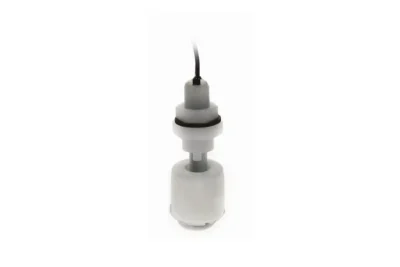
For top or bottom mounting, Vertical Plastic Level Switches may be more appropriate. The RF-OV11 Plastic Vertically Mounted Level Switch is one example within this range.
Small tanks may benefit from compact switches, while larger process vessels may require longer stem-mounted designs or adjustable level switches.
4. What Do You Need the Switch to Do?
Unlike a level transmitter, which continuously measures the liquid level, a level switch activates when the liquid reaches a set point.
Typical applications include:
- High-level overflow protection
- Low-level alarm
- Pump control
- Dry-run protection
- Automatic tank filling
- Empty tank detection
If you’re unsure whether you need a switch or continuous level measurement, read our guide: What’s the Difference Between a Level Switch and a Level Transmitter?
5. Operating Temperature and Pressure
Industrial processes often involve challenging operating conditions.
Check:
- Maximum operating temperature
- Pressure rating
- Steam cleaning requirements
- Outdoor installation
- Hazardous environments
Selecting a switch rated for your operating conditions ensures reliable performance and longer service life.
6. How Clean Is the Process?
Liquids containing sludge, debris or heavy deposits can affect some sensing technologies.
For example:
- Float switches can be ideal for many dirty water applications.
- Optical switches work best in relatively clean liquids.
- Heavy coatings or build-up may require alternative sensing methods.
If your application involves solids or significant contamination, it’s worth discussing the operating conditions before selecting a product.
7. What Electrical Output Do You Need?
Your level switch needs to integrate with your control system.
Consider:
- Normally Open or Normally Closed
- AC or DC voltage
- Relay outputs
- PLC compatibility
- Alarm circuits
- Pump controllers
Choosing the correct electrical configuration makes installation simpler and avoids unnecessary modifications later.
8. Do You Need Adjustable Switching Points?
Not every application requires the switch to activate at a fixed level.
Adjustable and Submersible Level Switches allow you to fine-tune the switching point, making them useful where operating conditions may change or multiple tank sizes are used.
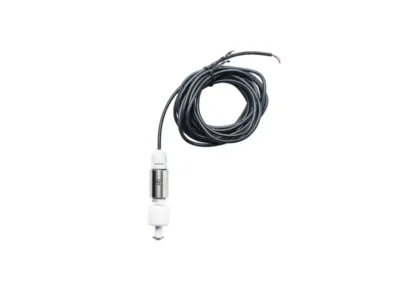
A product such as the AFS-302 Adjustable/Submersible Tank Level Switch can be useful where the switch needs to suit a specific installation depth or changing tank requirement.
Common Tank Scenarios
For a small water or oil tank
A compact plastic float switch is often suitable, particularly where the liquid is non-corrosive and the installation space is limited. Browse Plastic Level Switches for suitable options.
For side-entry mounting
Where access is available from the side of the tank, a horizontal switch such as the AE-LH Horizontal Level Switch may be appropriate.
For top or bottom mounting
Where the switch needs to be installed vertically, products such as the RF-OV11 Plastic Vertically Mounted Level Switch can provide simple point-level detection.
For chemical or industrial tanks
Where the liquid is aggressive, hot or corrosive, Stainless Steel and Alloy Level Switches are usually a better starting point.
For unusual tank dimensions
If a standard product does not fit the application, Custom Level Switches may be required. The AE-LA3 Trimmable Vertical Level Switch is one option where the stem length needs to be adjusted.
Still Unsure?
Every application is different.
Factors such as liquid type, tank design, operating conditions and electrical requirements all influence the best solution.
At Applications Engineering, we supply a wide range of industrial Level Switches & Sensors suitable for everything from simple water tanks to demanding industrial processes. Our team can help you identify the most suitable option based on your application rather than simply choosing from a catalogue.
Explore Our Level Switch Range
The right level switch depends on the liquid, tank design, mounting position and operating conditions. If you already know what you need, you can browse the full Level Switches & Sensors range. If not, Applications Engineering can help you narrow down the options and choose a switch that fits the application.
Share This Post