A priority demand valve or PDV is an electrical valve, fitted to domestic and residential fire sprinkler systems, that makes sure available water is directed to the sprinklers in the event of a fire, rather than to the property itself. It helps fire sprinkler systems comply with BS9251:2021 (the Standard for ‘Fire Sprinkler Systems for Domestic and Residential Occupancies’) where a shared mains supply might otherwise reduce sprinkler performance.
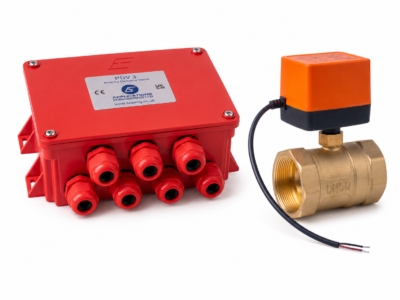
Contrary to popular belief, and unlike what some companies advertise, a PDV is not just an individual valve. To comply with BS9251:2021, specific features (such as a manual reset on activation and a failsafe on loss of power) are necessary. Therefore, it needs a controller along with the valve itself. For this reason, we often refer to our priority demand valves as a PDV kit (containing a valve and a relay box) to prevent confusion, as many mistakenly believe a PDV is a standalone valve (such as a solenoid valve, for example.)
What does a priority demand valve do?
Fire sprinkler systems rely on pressure and flow from a water supply to safely and effectively control a fire. In normal conditions a PDV allows water to flow to the domestic system as usual, but when a fire sprinkler system operates or when power to the building is lost, the domestic line is shut and the sprinkler water supply is prioritised. Instead of distributing water to appliances like taps, showers or toilets, it directs all water to the sprinkler.
The purpose of a PDV is to ensure the sprinkler system has enough pressure and flow to control or suppress a fire in the types of properties covered by BS:9251, including (but not limited to):
- Individual houses
- Flats
- Dormitories
- Hostels
- Bed and Breakfast accommodation (B&Bs)
- Houses of multiple occupancy (HMOs)
- Residential care homes
At Applications Engineering, we provide priority demand valves in two specifications, ½” – 2” and 2 ½” – 8” to accommodate various pipe sizes and water flow requirements.
How does a priority demand valve work?
A PDV is installed on the domestic side of a shared water supply, usually just after the domestic stop tap and after the sprinkler branch so that it can isolate non-fire uses when required.
Under normal conditions the valve sits in an open position to allow a steady, consistent water flow to the property via the domestic system. If the sprinkler system engages, the priority demand valve automatically closes, thus isolating the supply to the property whenever the fire safety system has been activated. PDVs also come with either an actuated ball valve or butterfly valve, depending on the requirements of your system. Older versions of the PDV can be supplied as a solenoid valve; however, we have since moved away from these models, due to the coil getting very hot.
The automatic closing of the valve means that domestic appliances cannot compromise sprinkler integrity, thus ensuring a greater chance of a fire being put out.
Other priority demand valve FAQs
Why is my priority demand valve not working?
One of the most common issues is that power has not been correctly connected to the PDV relay box. For the valve to work as intended, the AC power supply must be wired into the AC in terminals, so that the valve can stay open as normal. Power does not need to be directly connected to the valve itself. As the unit is fail safe, the valve will move to the closed position if no power is detected, which prevents water from reaching the domestic system and ensuring the sprinkler supply remains available in a power cut.
If your priority demand valve is not working, installers should always confirm that the incoming supply is present, correctly fused, and engaged and that indicators on the unit show that power is available.
Why does this PDV look different to older models?
Applications Engineering now supplies the third generation of priority demand valves, which contain important nuances from earlier models. Installers who are familiar with previous models should review the correct technical specifications, because wiring arrangements, switch placements, or terminal layouts may look different to those they have used previously. Before installation, review the technical spec and illustrations to confirm inputs, outputs and links on printed circuit boards are understood.
Taking a few moments to compare the existing installation with the latest documentation can prevent many of the repeat calls that arise from incorrect assumptions about model compatibility and behaviour.
How should I connect the fire panel, flow switch and low-level inputs?
The PDV control board provides labelled input terminals for signals such as the fire alarm panel, low level switch or sprinkler flow switch. These inputs are designed for normally open (NO) signals as standard, so in many cases, the wiring is simply landed on the clearly-marked terminals. Where a normally closed (NC) device is used, the connection should be made to the common and NC terminals for that input and the small jumper link (identified as JP on the PCB) must be removed above the input.
Checking that the contact type matches the wiring method and that any jumpers are set correctly is a key step when commissioning or fault finding on site.
How do I wire the valve output?
On the PDV control board there is a dedicated output marked ‘Valve 230v Out’, which provides a powered switching output for the actuator. For compliance with BS:9251, the actuator conductors are connected to the C and NC terminals of this output. This ensures that the valve moves to the correct position when the control circuit changes state.
Following the markings on the PCB (as well as referring to the technical specifications) ensures that the actuator is supplied with the correct voltage, and that the valve responds as expected when the sprinkler system operates or when power is lost. If the actuator has been connected elsewhere or to the wrong terminals it may not move reliably, which can give the impression that the PDV is not functioning.
Do I need to use both the flow switch and fire panel inputs?
You do not have to use every available input on the PDV for the unit to provide correct priority to the sprinkler system. A suitable sprinkler flow switch input and a fire panel signal input don’t have to be engaged simultaneously – only one is necessary. In many residential fire sprinkler installations, the flow switch connection will suffice, but in some projects, the designer may choose to use a fire panel signal instead. But contrary to popular belief, using both isn’t mandatory, as they are both giving the same fire signal.
Where a priority demand valve should be used
A PDV is recommended whenever a fire sprinkler system shares its water supply with domestic use, and where concurrent demand from showers, taps, or appliances could reduce sprinkler performance exponentially. During design, the fire sprinkler contractor will calculate available flow and pressure and confirm whether a PDV is required for compliance and for the performance of the system.
Where necessary, the PDV is installed in the domestic line as part of the overall fire sprinkler valve set or riser arrangement. This is so that it can integrate neatly with other components such as flow switches, pump sets, and pressure switches.
Quality priority demand valves from Applications Engineering
Applications Engineering stock and supply compact, easy-to-install priority demand valves as part of a wider range of fire sprinkler valve systems for domestic and residential use.
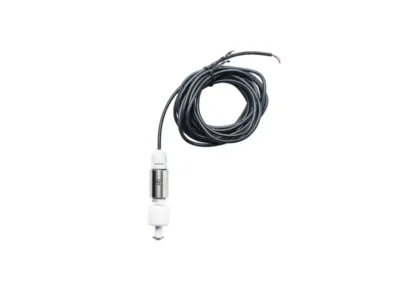
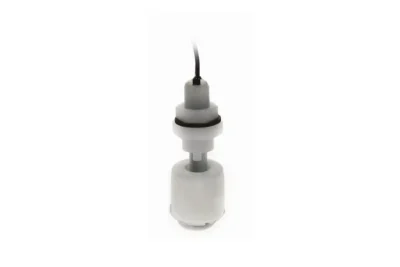
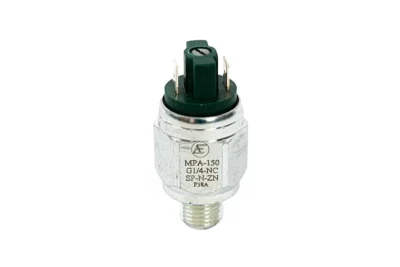
We also provide related components such as pressure switches, flow switches, and other sprinkler valve assemblies so that BS:9251 compliance can be achieved cohesively via one single source.
For detailed wiring information, product selection advice, or model-specific technical data, installers can refer to the current technical specifications.
Alternatively, for more complex queries, please contact the Applications Engineering team.
Share This Post