Rainwater harvesting tends to make headlines during a hosepipe ban, when watering the garden suddenly becomes a problem. The reality, though, is that the smartest time to plan a harvesting system is when water is plentiful, not when reservoirs are running low. Capturing rainfall through the wetter months means there’s a usable reserve in place long before summer demand kicks in.
For commercial sites such as golf courses, sports grounds, large estates, and grounds maintenance operations, rainwater harvesting offers a practical route to more sustainable irrigation. The systems themselves are relatively straightforward in principle, but their reliability depends on accurate, continuous monitoring of water level, flow, and pressure. This is where Applications Engineering’s range of sensors and switches plays a quiet but critical role.
How Does a Commercial Rainwater Harvesting System Work?
In essence, a rainwater harvesting system collects rainfall from a large catchment area, typically a roof, hardstanding, or course drainage network, and stores it in a tank for later use. From there, it can be filtered, pumped, and distributed for non-potable applications such as irrigation, vehicle washing, or toilet flushing.
A typical commercial system includes:
- A catchment surface to collect rainfall.
- Filtration to remove leaves, debris, and sediment before storage.
- A storage tank, often underground or partially buried, sized to balance collection capacity with anticipated demand.
- A pump system to draw water from the tank and deliver it at the pressure required by the irrigation network.
- A distribution network of pipework, valves, and sprinklers or drippers.
- A mains top-up arrangement, which keeps the system running during dry spells when stored water runs low. This must be configured to comply with the Water Supply (Water Fittings) Regulations 1999, typically using a WRAS-approved Type AA or Type AB air gap to prevent backflow into the public mains.
For irrigation in particular, the system has to deliver consistent flow and pressure across what may be a very large site. That cannot be achieved without reliable monitoring at every stage.
A Closer Look: Why Golf Courses Are a Strong Use Case
Few sites illustrate the value of rainwater harvesting better than a golf course. A typical 18-hole course can use tens of thousands of litres of water per night during peak summer irrigation, with greens, tees, fairways, and approaches all running on different schedules and pressures. The combination of large roof areas across clubhouses and maintenance buildings, significant hardstanding, and substantial below-ground storage potential makes harvesting a genuinely viable option.
There’s also a clear sustainability driver. The R&A’s Sustainable Golf Programme has placed water management front and centre, and many UK clubs are setting measurable targets for reducing reliance on mains and abstracted water. Reliable, data-led monitoring of harvested water is essential for both the engineering performance of the system and the reporting that increasingly accompanies sustainability commitments.
The Role of Level Monitoring in the Storage Tank
The storage tank is the heart of any rainwater harvesting system, and knowing exactly how much water is available is essential.
Level switches and sensors provide the data needed to:
- Trigger mains top-up when stored water falls below a set threshold.
- Prevent the pump from running dry, which can cause significant damage.
- Detect overflow conditions when the tank is full.
- Provide visibility for grounds and estate managers, so irrigation schedules can be adjusted in line with available reserves.
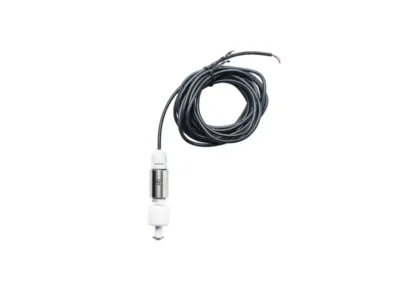
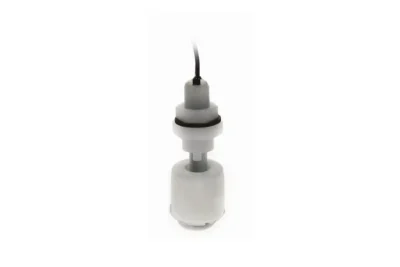
The AFS-302 adjustable submersible tank level switch is a popular choice for harvesting tanks, offering reliable level detection in a compact, easy-to-install format. For sites that need continuous level measurement rather than simple high/low switching, AE also supplies a range of level sensors that provide a continuous output signal.
Why Flow Monitoring Matters in Distribution
Once water leaves the tank, accurate flow measurement becomes the next priority. For a golf course or large estate, irrigation may run across multiple zones, with very different demands on each. Greens require precise, frequent applications, while fairways may run heavier cycles less often. Without flow monitoring, it’s almost impossible to know whether a zone is performing as designed or whether a leak, blockage, or burst is going undetected.
Flow sensors and meters support sustainable irrigation by:
- Verifying that each zone is receiving the correct volume of water.
- Detecting unusual flow patterns that may indicate leaks or pipe failures.
- Supporting water usage reporting, which is increasingly important for sites with sustainability commitments or environmental reporting obligations.
- Enabling smart, demand-led irrigation rather than blanket scheduling.
For grounds managers focused on water efficiency, the data from a well-specified flow monitoring system can quickly pay back the cost of installation through reduced waste alone.
This is the same principle Applications Engineering explored in our blog on desalination systems and the role of flow monitoring, where accurate measurement underpins every successful water management strategy.
Pressure Monitoring at the Pump Stage
The pump that drives the irrigation network is one of the most vulnerable components in the system. If pressure drops unexpectedly, sprinklers stop performing as designed, and coverage becomes patchy. If pressure spikes, pipework and fittings can fail.
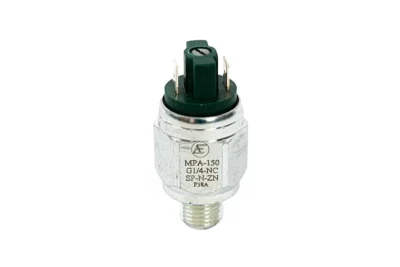
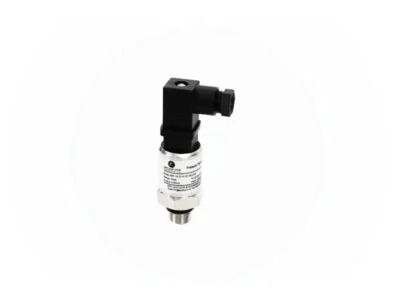
Pressure transducers and pressure switches protect the system by providing real-time feedback on pump performance, allowing controllers to shut down or alert operators if conditions move outside safe parameters. For larger sites, this feedback is often integrated into a wider building management or site monitoring system.
Sustainable Irrigation Starts with Reliable Monitoring
Rainwater harvesting is one of the most accessible ways for commercial sites to reduce reliance on mains water. Whether the goal is meeting sustainability targets, lowering water bills, or simply keeping greens, pitches, and grounds healthy through drier summers, the principle is the same: capture water when it’s abundant, store it carefully, and distribute it intelligently.
The technology behind that intelligence is, in large part, the level, flow, and pressure monitoring built into the system. Get the sensors and switches right, and the system will quietly work in the background for years.
To discuss the right monitoring solution for a rainwater harvesting or irrigation project, contact Applications Engineering and speak to our technical team.
Share This Post