Manufacturers are under constant pressure to ensure equipment reliability and longevity while reducing expenditure and overheads wherever possible. As margins tighten and infrastructure ages with each passing year, that becomes increasingly challenging.
Asset Performance Management (APM) has emerged as a vital framework for addressing these challenges. However, many manufacturers are unclear about the extent of APM, what it entails, and how to implement it effectively as a comprehensive site-wide solution. This is why it’s important to understand the fundamentals of APM and the role of condition monitoring technology to cultivate a proactive maintenance approach, rather than a reactive one.
What is APM?
Asset Performance Management represents a holistic framework that organisations leverage to monitor, analyse and optimise the performance of their physical assets. Many organisations mistakenly assume that APM is another term for preventative maintenance; instead, APM combines data collection, advanced analytics and strategic maintenance planning to proactively identify potential issues before they escalate into costly failures.
APM integrates traditional maintenance strategies, analytics and data collection to:
- Minimise unplanned downtime
- Reduce maintenance costs
- Extend asset lifespan
- Improve business performance
By integrating traditional maintenance techniques with modern sensor technology and software analytics, APM provides a complete picture of asset health and performance trends over time.
The Business Case for APM
According to recent industry surveys and insights, operators spend:
- 30% of operational expenditure (OPEX) on unplanned maintenance
- 40% of OPEX on scheduled and unscheduled maintenance (covering approximately 20% of their assets)
Furthermore, companies have been losing between 3% and 5% of their production capacity to unplanned downtime. In high-volume manufacturing applications, lost production can translate into substantial unrealised revenue.
These statistics highlight why asset reliability has become such a critical focus. APM offers a structured approach to achieving key goals of asset reliability, which are directly correlational to production availability, process speed and product quality.
As market pressures drive the need for maximum uptime and long-term cost reduction, APM helps businesses achieve these objectives with confidence.
Challenges of APM Integration
Several market drivers are pushing organisations towards more sophisticated asset management approaches.
- Loss of key personnel (by extension, less on-site expertise and skill)
- Knowledge gaps in equipment familiarity
- Ageing assets
- Lower capital budgets
- Assets becoming more digitised and interconnected (requiring higher tech knowledge)
As a result, traditional reactive maintenance is insufficient and cannot deliver the results that modern operations require.
The Role of Condition Monitoring
Condition monitoring underscores every APM programme. This is a proactive maintenance approach that uses numerous techniques to assess the health of industrial equipment.
It aims to identify potential problems early through continuous or periodic monitoring of key parameters. This allows maintenance teams to quickly intervene when problems arise, minimising downtime and maximising asset lifespan.
Modern condition monitoring relies on permanently or temporarily installed sensors that collect equipment and material performance data at specific time intervals. This data is then transmitted to users, often through data analytics software that can help them identify trends, anomalies and false positives that might indicate mounting problems.
The parameters monitored typically include:
Each of these measurements provides valuable insight into equipment condition and can serve as an early warning system for potential failures.
Applications of APM-Friendly Monitoring Technology
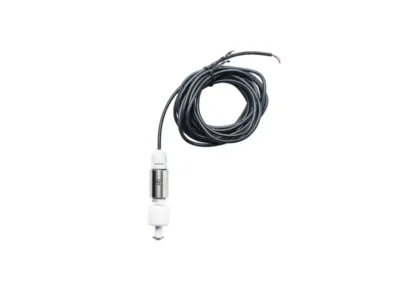
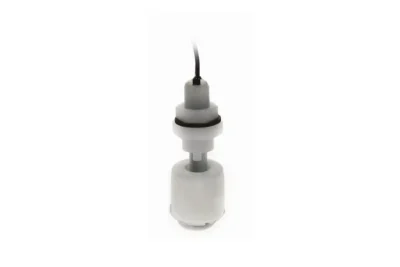
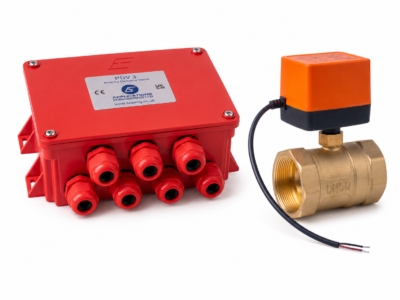
The following categories of devices play a vital role in helping facilities and maintenance teams identify equipment that may be underperforming or heading towards failure.
- Temperature transmitters detect when liquids, motors or other equipment begin to overheat and risk breaking entirely, thus affecting system performance.
- Flow measurement equipment (such as oval gear flow meters) monitors the flow of oil regardless of changes in temperature of viscosity. This makes them ideal for process control.
- Rotating equipment must be consistently lubricated, and any deviations from flow rates can suggest lubrication problems or increased wear of the specific parts.
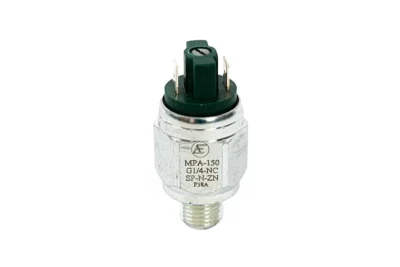
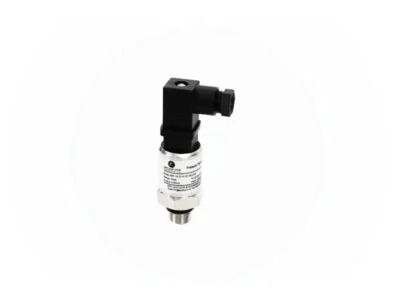
- Pressure sensors (particularly in refrigeration and heating systems) can indicate potential failures or downtime, allowing teams to schedule interventions at the right time, rather than post-fault and disruption important production lines.
Three Pillars of APM Success
An effective APM programme rests on three key pillars:
- Technology: providing the real-time monitoring, data and analytics
- Process improvements: where decisions on workflows, procedures and strategies are made based on real-time data, shifting the process from reactive to proactive
- People: who are provided with better quality information and clear objectives, and who are encouraged to collaborate among each other.
The software and technology provides the essential APM tools, but it’s the people and processes that are responsible for its success.
Many organisations harbour misconceptions about APM that can undermine implementation efforts. APM is not exclusively for large enterprises; facilities of all sizes can benefit from structured approaches to asset management.
Quality Sensors for Your APM Programme
Applications Engineering is a proud distributor of high-quality sensors, transmitters, and monitoring equipment that can be integrated with any existing maintenance programme.
Our pressure, temperature and flow sensors provide fundamental monitoring capabilities that apply across numerous applications and industries. With seamless connectivity and integration across different facilities and buildings of all shapes and sizes, our products are designed to ensure reliability and longevity for your premises.
If your organisation is considering APM implementation, or you are in the process of reviewing your existing processes and seeking improvement opportunities, consider Applications Engineering for your condition monitoring technology. It’s only going to become more necessary in the months and years to come. Contact us today to find out about our equipment availability.
Share This Post